
Car Leasing in Missouri (2026): Lease Tax by City, Personal Property Tax & $0 Down
Vehicle Leasing and Financing Simplified
Drive away with your dream car
Understanding Your Missouri Lease Bill: How the Tax Actually Works
Most car-buying guides explain Missouri's sales tax as if every driver pays a single number. In reality, a Missouri lease payment is built from three separate tax layers, and understanding them is the single most useful thing you can do before you sign.
Layer 1: The state rate. Missouri charges a flat 4.225% state sales tax on motor vehicle sales and leases. This part never changes, no matter where in the state you live.
Layer 2: The county rate. On top of the state rate, your county adds its own tax — anywhere from 0% up to roughly 2.75%, set by local ordinance. As of 2026, only two of Missouri's 115 counties still charge 0% county use tax on vehicles; nearly every other county has voted in some additional rate over the past decade.
Layer 3: The city or district rate. Cities, and in some cases special taxing districts within a city, layer on yet another rate. This is why two people leasing the identical car ten miles apart can see noticeably different totals.
Combined, these three layers push the real-world rate on a Missouri lease well past the “headline” 4.225% you’ll see quoted everywhere. In practice:
Kansas City (Jackson County): combined rates generally run in the 9%–10% range depending on the exact address and any special district.
St. Louis City: among the highest in the state, commonly cited around 9.7%.
St. Louis County suburbs: typically 7.5%–8%, though individual municipalities vary.
Smaller cities and rural counties (Springfield, Columbia, and much of mid-Missouri): often land closer to the 6%–7.5% range.
Because your rate is tied to where the vehicle is registered, not where you buy it, a driver who lives just outside city limits can sometimes land in a meaningfully lower tax bracket than a neighbor a few blocks away. Before you sign a lease, it’s worth checking your exact combined rate on the Missouri Department of Revenue’s own sales/use tax rate tables rather than trusting a number a dealer quotes verbally — local rates are certified and updated by the DOR, and they do change with local ballot measures.
Best Deals Available Now in Missouri

The Part Almost Nobody Explains: How Missouri Taxes a Lease Specifically
Here’s where Missouri leasing gets genuinely different from buying, and where most online guides fall short. Under Missouri regulation 12 CSR 10-103.350 and RSMo §144.070, a company that leases vehicles to Missouri residents has a choice: it can pay sales tax once, upfront, on its own purchase of the vehicle — or it can skip that upfront tax and instead collect sales tax from you, the lessee, on every monthly lease payment for the life of the lease.
Most leasing companies choose the second option. That’s why your Missouri lease statement typically shows sales tax as a line item on each monthly payment, rather than as a single lump sum rolled into your cap cost the way it might be for a cash purchase. It also means:
Your down payment (the “capitalized cost reduction”) is taxed too — Missouri treats it as part of the lease consideration, not as a separate, tax-free transaction.
If you move within Missouri during your lease and your new address falls in a different county or city, your monthly tax rate can change mid-lease, because the rate is tied to your registration address, not a locked-in rate from signing day.
If your leasing company is based out of state but you register the vehicle at a Missouri address, Missouri’s highway use tax rules (RSMo §144.440) still apply the same combined local rate as if you’d leased from an in-state company.
None of this makes leasing more expensive than buying in Missouri — the rate is identical either way — but it does change when and how you pay it, which matters when you’re comparing a lease quote’s “total due at signing” against a purchase quote’s out-the-door price.
The Missouri Personal Property Tax Question (And Who Actually Pays It)
If there’s one Missouri-specific cost that trips up first-time leasers — especially anyone moving from a state without this tax — it’s the annual personal property tax on vehicles. This is separate from sales tax, separate from registration, and billed by your county, not the state.
Here’s How It Actually Works for a Leased Vehicle
Missouri counties assess personal property tax based on ownership as of January 1 each year, using roughly one-third of the National Automobile Dealers Association trade-in value as the assessed base (per RSMo §137.115). Because a leasing company — not you — legally owns the vehicle, the leasing company is generally the one billed by the county assessor, not the individual driver.
In practice, that plays out one of two ways, and it depends entirely on your specific lease agreement:
Most common: The leasing company pays the county directly and builds that cost into your monthly payment. If this is your situation, you should not list the leased vehicle on any personal property assessment form the county sends you — doing so risks double-billing.
Less common: Some leases explicitly assign the tax obligation to the lessee. If your contract says this, you’ll need to list the vehicle on your own assessment form so the county bills you directly, and you’ll need to keep the resulting tax receipt (you’ll need it to renew your plates).
A few details that catch people off guard:
Missouri does not prorate this tax. If you’re leasing (or garaging a leased vehicle) in Missouri on January 1, you owe the full year’s tax — even if you move out of state, return the car, or end the lease on January 2. Conversely, if you move into Missouri after January 1, you owe nothing for that calendar year.
You’ll need proof either way at renewal time. Missouri’s license offices won’t renew your plates without either a paid personal property tax receipt or a Certificate of Non-Assessment from your county assessor confirming you weren’t liable. If your leasing company pays the tax, ask them for a copy of that receipt before you head to renew.
Rates vary meaningfully by county — commonly cited in the neighborhood of $7–$12 per $1,000 of assessed value, though your specific county collector’s office is the authoritative source for your exact rate.
If you’re at all unsure which category your lease falls into, your leasing company’s customer service line (not the dealership) is the correct place to ask — this is contract-specific, not something a generic answer can settle.
Top Missouri Car Lease Specials
Registration, Title & Inspection Rules for a Leased Vehicle in Missouri
Title and Registration Costs
When your leased vehicle is titled in Missouri, expect these standard state fees, separate from any sales tax:
Title fee: $8.50, plus a small processing fee
Registration fee: tiered by the vehicle’s taxable horsepower (an older Missouri formula based on cylinder bore and count, not the horsepower on the window sticker) — ranging from about $18.25 to $51.25 per year for passenger vehicles, plus a $9 processing fee
Two-year registration is standard for most passenger vehicles and simply doubles the annual figures above
The EV and Plug-In Hybrid Decal Fee
If you’re leasing an electric or plug-in hybrid vehicle, budget for Missouri’s alternative fuel decal, which rides on top of the standard registration fee rather than replacing it:
Battery-electric vehicles: $150 per year
Plug-in hybrids: $75 per year
Missouri is one of a shrinking number of states without a broader EV registration surcharge, though legislation to add one has been introduced in recent sessions — worth a quick check if you’re leasing an EV for a multi-year term, since fee structures like this can change during your lease.
The Documentation Fee Cap Most Guides Get Wrong
Missouri dealers are permitted to charge an administrative (“doc”) fee under RSMo §301.558 — but contrary to a lot of outdated advice still circulating online, this fee is capped and increases annually with inflation, per Missouri regulation 12 CSR 10-26.231. The cap has moved from $500 in 2021 to $604.47 for 2025, with a further CPI-based increase for 2026. Any fee above the current published cap isn’t legal, and Missouri dealers are also required to disclose the fee conspicuously and note in writing that it isn’t a government-mandated charge. If a dealer’s paperwork doesn’t disclose the fee this way, that’s worth raising before you sign.
Do You Actually Need a Safety Inspection on a New Lease?
Almost certainly not — and this is more generous than most people assume. Missouri’s biennial safety inspection requirement (RSMo §307.350) doesn’t apply to any vehicle within 10 model years of manufacture and under 150,000 miles, and new vehicles delivered with fewer than 6,000 miles at first sale get an additional near-new exemption. Since the overwhelming majority of leases run 24–48 months on new or near-new vehicles, your leased car will typically never need a safety inspection during the entire term.
Emissions Testing — Only If You’re in the St. Louis Metro
Missouri’s emissions inspection program, the Gateway Vehicle Inspection Program, applies only to vehicles registered in St. Louis City, and St. Louis, St. Charles, and Jefferson counties — jointly run by the Missouri Department of Natural Resources and the Missouri State Highway Patrol. If you’re leasing anywhere else in the state, from Springfield to Columbia to the Ozarks, this simply doesn’t apply to you. Within the covered counties, testing follows the same odd/even-year schedule as safety inspections, and most stations can handle both tests in a single visit.
Note: as of mid-2026, Missouri lawmakers have discussed legislation that could scale back the statewide safety inspection program significantly. Nothing has been signed into law as of this writing, so the rules above remain current — but it’s a live legislative topic worth a quick check if your lease runs multiple years.
Missouri Leasing Laws: What Dealers Are Legally Required to Tell You
Missouri has specific, enforceable disclosure rules for how dealers can advertise and present lease terms — and knowing them turns a confusing ad into a checklist.
The Lease Advertising Law (RSMo §301.567)
Any Missouri dealer advertisement that mentions a monthly payment, down payment, or lease terms must clearly disclose whether the figure is for a lease or a financing deal — the two can’t be blurred together. If it’s a lease, the ad has to make clear:
The total amount due at signing, broken down by category (not lumped into one number)
The lease term, stated in months
Whether the advertised payment requires a security deposit or other conditions not obvious from the headline number
The law also restricts loose language: terms like “list price” or “sticker price” can only refer to the manufacturer’s suggested retail price, and phrases like “at cost” or “below invoice” are barred outright because they’re impossible for a consumer to verify. If you see a Missouri lease ad that doesn’t break out these numbers clearly, that ad likely isn’t compliant — and you’re entitled to ask for the full breakdown before you ever sit down at a dealership.
Your Recourse: the Missouri Merchandising Practices Act
If a dealer misrepresents lease terms, conceals fees, or otherwise deceives you in a way that costs you money, Missouri’s Merchandising Practices Act (RSMo §407.020) gives you a real path to recourse — and it explicitly covers leased merchandise, not just purchases. You don’t have to prove the dealer intended to deceive you; a practice that has “the tendency or capacity to mislead” can qualify. You can file a complaint with the Missouri Attorney General’s office directly, and separately, the law allows you to pursue your own claim for damages if you suffered an actual financial loss as a result.
This isn’t a substitute for reading your lease contract carefully — but it’s a meaningful backstop if something in the deal doesn’t match what was advertised.
EV & Hybrid Leasing in Missouri: What’s Actually Available in 2026
If you’re cross-shopping an electric or plug-in hybrid lease, the incentive picture has shifted significantly, and a lot of what you’ll find searching online is now out of date.
The federal credit is gone — including the leasing workaround. The $7,500 federal new-EV credit and the $4,000 used-EV credit both ended for vehicles acquired after September 30, 2025, under the One Big Beautiful Bill Act. That also closed the “commercial vehicle” loophole that let many 2024–2025 EV leases quietly pass through a version of that credit as a lower monthly payment. If a Missouri lease ad in 2026 implies a federal EV credit is baked into the price, that’s worth double-checking directly with the dealer’s finance office.
Missouri has no state-level EV purchase or lease credit. Unlike some coastal states, Missouri doesn’t run its own EV rebate program. Where the real savings are is at the utility level:
Ameren Missouri and Evergy, along with numerous rural electric cooperatives across the state, offer home Level 2 EV charger rebates — typically in the $250–$500 range — available to customers who purchase or lease a qualifying EV.
Several of these same utilities offer discounted time-of-use electricity rates specifically for EV owners and lessees, which can meaningfully lower your cost per mile if you charge overnight.
The federal home-charger tax credit (Section 30C, IRS Form 8911) covers 30% of installation costs but is time-limited and eligibility depends on your specific census tract — check current status before assuming it applies.
One financing-only wrinkle worth knowing about, even if you lease: the same 2025 federal law that ended the EV credit introduced a new auto loan interest deduction (up to roughly $10,000 per year through 2028) for financed, U.S.-assembled vehicles. This deduction applies to loan interest on a purchase, not to lease payments — so it’s a real factor if you’re weighing lease vs. finance on a U.S.-built EV, but it won’t show up as savings if you ultimately choose to lease.
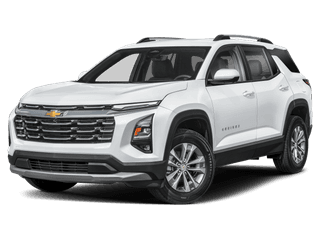
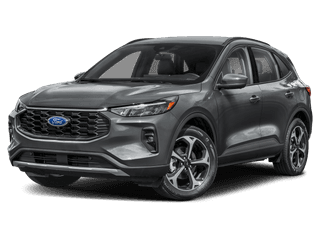
Bottom line: EV lease deals in Missouri right now are being driven almost entirely by manufacturer incentives and utility rebates rather than government tax credits — which makes comparing actual advertised lease specials (like the ones above) more useful than relying on assumed tax savings that no longer exist.
Missouri Lease Costs by Region: A Quick Comparison
Missouri’s tax layering means your total lease cost can vary by a meaningful margin depending on where you register the vehicle, even before you factor in dealer inventory and demand:
Kansas City metro (Jackson County and surrounding counties): Highest dealer density in the western half of the state, competitive lease incentives, but combined tax rates that often land near the top of the state’s range inside city limits.
St. Louis metro (St. Louis City, St. Louis County, St. Charles, Jefferson): The largest dealer network in the state and the only region subject to emissions testing — factor the extra inspection step into your renewal planning, even though it doesn’t affect your lease payment itself.
Mid-Missouri and Springfield markets (Columbia, Springfield, Jefferson City): Generally lower combined local tax rates than the two major metros, plus no emissions testing requirement — often an underrated combination for total cost of ownership.
Rural counties statewide: Frequently the lowest combined tax rates in the state, though vehicle selection and lease inventory are naturally more limited than in the metro areas — which is where a statewide platform that aggregates dealer inventory, like Auto Bandit, does the most work for you by surfacing deals you wouldn’t find by visiting a single local lot.
Frequently Asked Questions
Who Pays Personal Property Tax on a Leased Vehicle in Missouri?
Legally, the leasing company as the vehicle’s owner is generally billed by the county — but your specific lease agreement can assign that cost to you instead. Check your contract, and confirm with your leasing company (not the dealership) which applies to you.
Does My New Leased Car Need a Safety Inspection in Missouri?
No, in almost every case. Vehicles under 10 model years old with fewer than 150,000 miles are exempt from Missouri’s safety inspection requirement, which covers virtually every leased vehicle for the length of a typical lease term.
Is There a Cap on Dealer Documentation Fees for a Missouri Lease?
Yes. As of 2025, the statutory maximum is $604.47, adjusted annually for inflation under Missouri regulation 12 CSR 10-26.231. Fees above the current published cap are not legal.
Will I Still Get a Federal Tax Credit If I Lease an EV in Missouri?
No. The federal EV tax credit — and the leasing pass-through that some manufacturers used to offer — both ended for vehicles acquired after September 30, 2025.
Do I Need an Emissions Test If I Lease a Car Outside the St. Louis Area?
No. Missouri’s emissions testing program only applies to vehicles registered in St. Louis City and St. Louis, St. Charles, and Jefferson counties. Everywhere else in the state, including Kansas City, Springfield, and Columbia, only the safety inspection rules (which most leases are exempt from) apply.
How Auto Bandit Works
Auto Bandit takes the stress out of finding the best car deals by offering clear, competitive leasing and financing options. Whether you’re looking for a new or used vehicle, our platform connects you with the top offers in Missouri, ensuring a simple and straightforward process every step of the way. Start exploring today to see how Auto Bandit can help you drive off in your next vehicle.
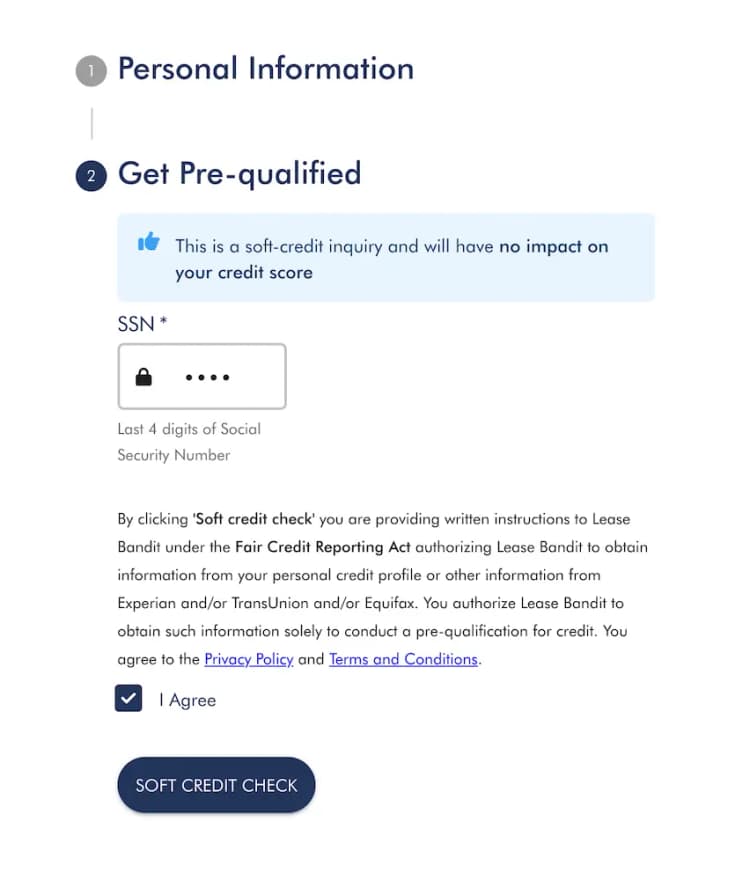
Create an account and fill in your information
Sign up with your email and zipcode. We need your credit tier to provide accurate prices
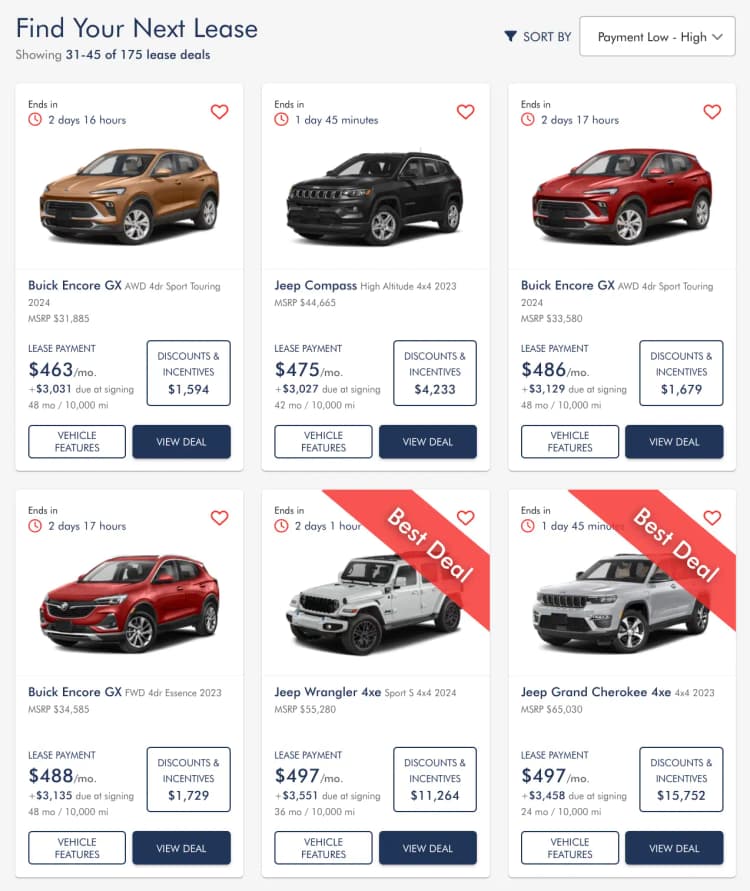
Find your vehicle
Search for vehicles by the year, make, model or even option packages you want
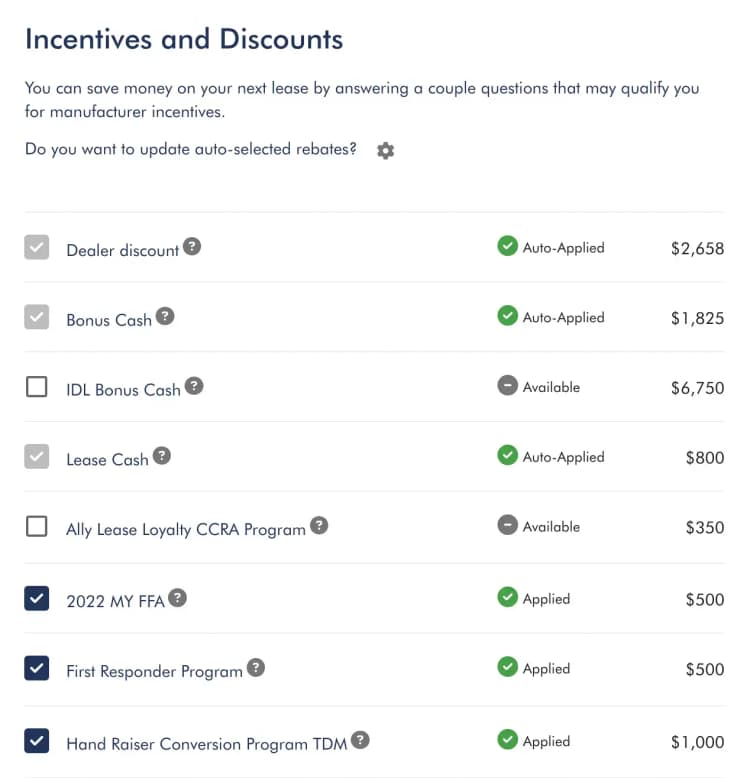
Apply incentives and rebates
Answer some simple questions to take advantage of incentives and rebates
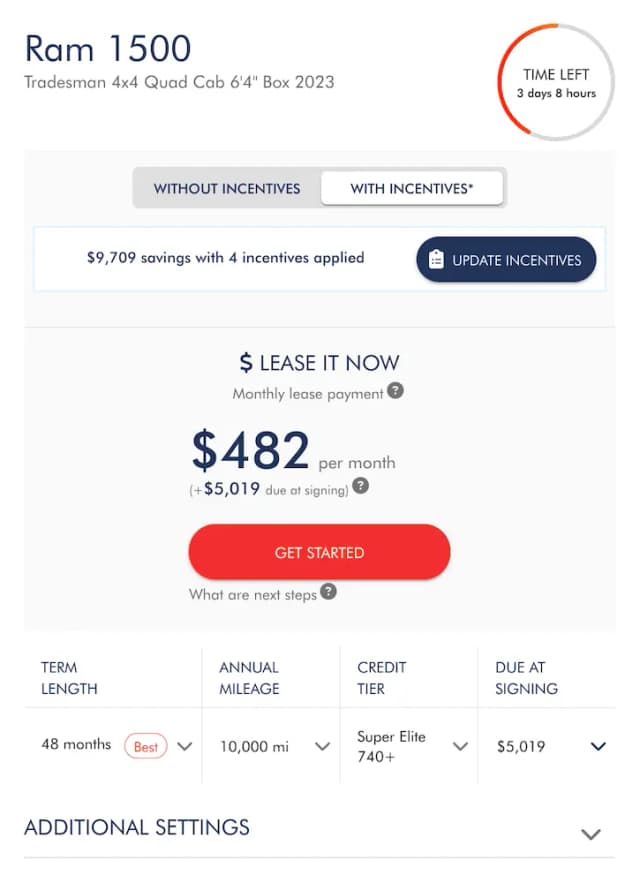
Set your leasing terms and get a great deal
Whether you choose to lease or finance, adjust your term length, mileage, down payment, and other conditions to find the perfect plan. Enjoy flexible options tailored to your needs and drive away with confidence.
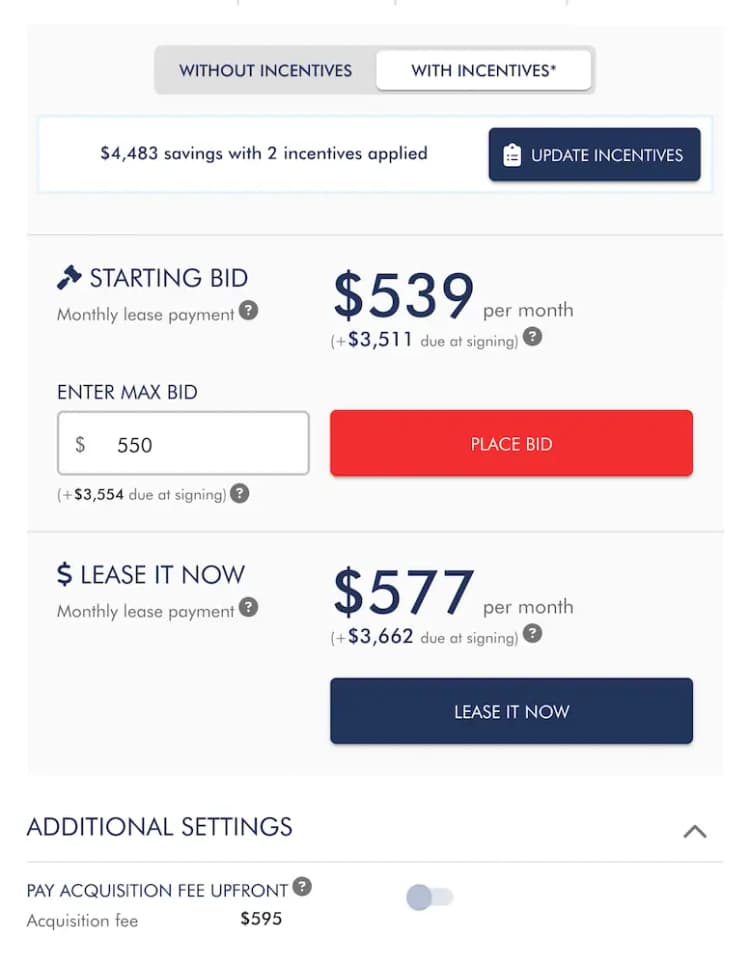
Explore Leasing and Financing Options
Discover your perfect vehicle through flexible leasing and financing options, with great deals tailored to your needs.
Zero Down Lease Options in Major Missouri Cities
Lease or Finance a Car Near You

