
Car Leasing in Virginia: What the Lease Payment Doesn't Tell You
Vehicle Leasing and Financing Simplified
Most states that tax lease payments do it the same way: a little sales tax gets added to each monthly bill, proportional to what you're actually using up. Virginia doesn't work that way. It taxes a lease almost exactly like it taxes a purchase — a 4.15% Motor Vehicle Sales and Use Tax on the vehicle's full value, due up front, before your first monthly payment even shows up on paper. Lessees who've moved here from states like New York or Georgia are usually the ones most caught off guard by this, since they're used to that upfront number being tiny.
That's the first thing worth knowing. The second is that Virginia is one of a shrinking number of states that also bills you an annual personal property tax on the car itself, on top of the sales tax — a bill that has nothing to do with your lease company and everything to do with which city or county the car is garaged in. Add a mandatory yearly safety inspection, a separate Highway Use Fee if you're leasing an EV, and a state EV rebate program that exists on paper but currently isn't paying anyone — and you've got a leasing environment that rewards knowing the details before you sign, not after.
Top Virginia Car Lease Specials (Updated October 2026)


Where the Money Actually Goes: Virginia's Lease Tax, Explained Properly
Here's the mechanism, not just the number.
Virginia's Motor Vehicle Sales and Use Tax (SUT) is 4.15%, with a $75 minimum. What the tax applies to is the part people get wrong: the Code of Virginia defines the taxable “sale price” as the total price of the vehicle, not a stream of monthly payments — and that definition applies to leases the same way it applies to sales (Code of Virginia §58.1-2401, levy). In practice, that means:
On a $35,000 leased vehicle, the SUT due is roughly $1,453 — not a few dollars tacked onto your monthly bill.
This amount is technically owed by the leasing company (the “lessor”), who is the one titling the vehicle — but nearly every consumer lease contract passes it straight to you, either rolled into your capitalized cost (raising your monthly payment) or collected as a due-at-signing fee (according to Virginia DMV, “Leasing a Vehicle”). Ask specifically how your dealer structured it; the number should appear as a distinct line on your lease worksheet.
If you buy the car at lease-end, Virginia charges SUT again on the residual value — unless you can show you already paid SUT on this vehicle in Virginia, the lease was in your personal name rather than a business's, and you're buying directly from the lessor or original selling dealer. Meet all three and you should be exempt from paying it twice (“Motor Vehicle Sales and Use Tax,” SUT exemption on lease buyout).
There's no add-on local sales tax stacked on top of the 4.15% for vehicles the way there is for groceries or retail goods in some Virginia cities — the SUT is a single flat statewide rate, collected by DMV rather than the Virginia Department of Taxation.
A practical way to use this: when you're comparing a Virginia lease quote to an out-of-state one, don't just compare the monthly payment — ask what's due at signing and why. In Virginia, a big chunk of that “due at signing” number is a one-time tax bill, not a fee your dealer is padding.
The Annual Bill That Isn't on Your Lease Contract: Personal Property Tax
This is the part of Virginia leasing that has the least to do with your lease company and the most to do with your zip code.
Every Virginia locality — city or county — levies its own annual tax on the assessed value of vehicles registered there, and leased vehicles aren't exempt. DMV's own guidance confirms the tax bill goes to the lessor first, since they're the titled owner — but standard practice across the industry is for the lease contract to make the lessee responsible for reimbursing it, usually billed as a lump annual charge or split across the year.
What actually varies — a lot — is the rate and the relief. Virginia runs a statewide Personal Property Tax Relief Act (PPTRA) that discounts part of the tax on the first $20,000 of a personally-used vehicle's assessed value, but each locality sets its own relief percentage annually, and the underlying rate itself can differ by more than 60% between neighboring jurisdictions. A snapshot of six localities for tax year 2026:
| Locality | Rate per $100 of assessed value | PPTRA relief (2026) |
|---|---|---|
| Fairfax County | $4.57 | 49% on first $20,000 |
| Loudoun County | $3.09 | 41% on first $20,000 |
| Arlington County | $5.00 | 100% under $4,000; 13% from $4,001–$20,000; 0% above |
| Virginia Beach | $4.00 | ~42.7% |
| Richmond | $3.70 | Set annually — check current rate |
| Norfolk | $4.33 | Set annually — check current rate |
Source: rates compiled from published 2026 locality data and local news coverage of assessment season; verify with your own commissioner of the revenue before budgeting, since every locality resets its rate and relief percentage on its own schedule, and some — like Loudoun in 2026 — have also changed how they value the vehicle itself. (Locality rates compiled from published 2026 city/county data)
The takeaway: two people leasing the exact same car for the exact same monthly payment can end up with meaningfully different total costs purely based on where the car is garaged. If you're deciding between, say, an apartment in Arlington and one twenty minutes away in a lower-rate county, this is a real number to run before you sign a lease on either the apartment or the car.
Registration, Titling, and the EV-Specific Fee Most Payment Estimates Skip
The base fee structure is the same whether the car is leased or owned:
Title fee: $15 flat, technically the lessor's cost.
Annual registration: roughly $30–$45 depending on the vehicle's weight class.
Highway Use Fee (EVs and high-MPG vehicles): currently $135.63 for the July 2026–June 2027 registration cycle, per DMV's official fee schedule — assessed in place of the gas tax an EV never pays at the pump (Virginia DMV, 2026 Highway Use Fee Chart (PDF) — effective July 2026–June 2027).
If you're leasing an EV, that Highway Use Fee is worth budgeting separately — it rarely shows up in the monthly payment estimate you get from a dealer or a lease calculator, but it's due at registration and again at every renewal.
Leasing an EV in Virginia Right Now
The honest version of this section looks different than it would have a year ago:
Virginia's state EV rebate law is real, but currently not paying anyone. Code of Virginia §§45.2-1726 through -1733 authorizes rebates up to $2,500 on a qualifying new or used EV (plus an extra $2,000 for lower-income applicants), but it's funded only “subject to availability” — and as of this writing, that availability hasn't materialized at the scale the original law envisioned. There's a newer development worth watching: state budget action for fiscal year 2027 earmarks roughly $5 million for a scaled-back version of the program — a flat $500 rebate, used vehicles only, first-come-first-served, no new-vehicle rebates. That's a meaningfully smaller program than the original law describes, and it hadn't fully taken effect as of this writing. Check the status before counting on either version.
The federal EV tax credit is gone. Both the purchase credit and the related mechanism some lessors used to pass savings through on leases ended for vehicles acquired after September 30, 2025. There is currently no federal credit available on a new EV lease in Virginia.
Dominion Energy runs an EV Charger Rewards Program — a $125 enrollment incentive for installing a qualifying Level 2 smart charger and enrolling it in managed/off-peak charging — available regardless of whether you lease or own the vehicle. Program terms and eligible charger models are set by Dominion and worth confirming directly before you buy hardware.
Clean Special Fuel plates remain available for $25/year and grant access to Virginia's legacy free HOV lanes (I-64, I-264, I-564, the Dulles Toll Road, and parts of Alexandria) — but not the tolled Express Lanes, and only for qualifying plug-in electric vehicles rather than the broader hybrid category the program used to cover.
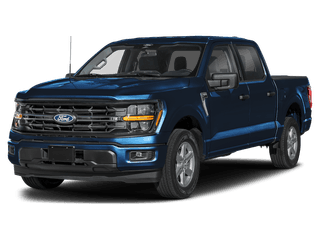
Best Deals Available Now in Virginia
The Legal Protections That Actually Apply — and the One Myth
Virginia does not have a general three-day right to cancel a vehicle lease or purchase. That “three-day right to cancel” idea shows up constantly in car-buying advice aimed at a national audience, but it's not Virginia law — once you sign, you're bound to the contract's actual terms.
What does apply:
A specific cancellation notice requirement. Virginia's dealer buyer's-order law (§46.2-1530) requires dealers to give a specific cancellation notice for certain vehicle transactions, including leases: if a deal is cancelled under the terms of that notice, the vehicle has to be returned within 24 hours, after which any down payment or trade-in gets refunded (Code of Virginia §46.2-1530, Buyer's order). It's a narrower protection than a blanket right to change your mind — read the notice language in your specific paperwork rather than assuming it applies broadly.
GAP coverage can't be a condition of approval. Dealers can't require you to buy GAP waiver coverage to get financing or lease approval, and any GAP terms and pricing have to be disclosed in writing, in plain language.
Dealer advertising oversight. Leasing transactions through licensed dealers fall under the Virginia Motor Vehicle Dealer Board, which enforces “truth in leasing” rules and can act against deceptive lease marketing.
Lemon Law coverage is murkier for leases than for purchases. Virginia's Motor Vehicle Warranty Enforcement Act clearly covers new vehicle purchases; its application to a persistent defect on a leased vehicle isn't spelled out as clearly on DMV's general guidance. If you're dealing with a lemon on a lease, it's worth a call to the Attorney General's Consumer Protection Section rather than assuming the purchase rules apply identically.
Annual safety inspection is mandatory regardless of who holds the title — a leased car needs to pass the same inspection as an owned one, something residents moving from inspection-free states like Florida or Texas often don't expect.
What Credit Actually Gets You on a Virginia Lease
Nationally, the average VantageScore credit score sits right around 700, and Virginia tracks close to that national line rather than standing out as unusually high or low — exact state-level figures shift depending on which bureau and scoring model is doing the counting, so treat any single number here as a rough compass, not a precise target (National credit score data, VantageScore/Experian aggregate reporting, 2026).
What matters more than the exact average is which tier you land in, since that's what actually moves your money factor:
Super Prime (roughly 781+): access to the lowest money factors and the promotional lease specials advertised at near-0% equivalent rates.
Prime (roughly 661–780): solid approval odds and competitive terms — most applicants land here, but not automatically at the headline promotional rate.
Nonprime and Subprime (below 660): still generally approvable, but with meaningfully higher money factors — recent industry data puts average new-vehicle APRs in the 13–16% range for these tiers, versus under 5% for Super Prime.
If your score sits in the low-to-mid 700s — a common spot for Virginia applicants — you'll likely qualify for a lease, but not necessarily the number in the ad. It's worth asking the dealer directly which tier your score places you in, and whether a slightly larger down payment or a shorter term moves you into a better bracket.
Frequently Asked Questions
Do I pay tax on the full car price or just my monthly payments when leasing in Virginia?
The full price, at signing — not spread across your payments. Virginia's 4.15% Motor Vehicle Sales and Use Tax applies to the vehicle's total value, the same way it would on a purchase, even though you're leasing rather than buying.
Do I owe personal property tax on a car I'm leasing?
Yes. Virginia localities tax leased vehicles the same as owned ones. The bill technically goes to the leasing company, but your lease contract almost certainly makes you responsible for reimbursing it.
Is there a 3-day right to cancel a car lease in Virginia?
No — that's a myth that doesn't apply here. A narrower law requires a specific cancellation notice and a 24-hour vehicle-return window in certain circumstances, but it isn't a general right to change your mind after signing.
Are there still EV incentives for leasing in Virginia?
The original state rebate law (up to $2,500, plus $2,000 for lower-income applicants) is on the books but has been effectively unfunded. A newer, smaller state budget action targets a $500 rebate for used EVs only, on a first-come basis — check current status before relying on either. The federal EV tax credit expired for vehicles acquired after September 30, 2025. Utility-level incentives, like Dominion Energy's charger enrollment program, are the more reliable savings right now.
Who's responsible for paying registration and title fees on a leased vehicle?
Technically the lessor, since the vehicle is titled in their name — but most leasing companies build these into your drive-off costs or monthly payment. Check your lease worksheet's itemized fees.
How Auto Bandit Works
Auto Bandit takes the stress out of finding the best car deals by offering clear, competitive leasing and financing options. Whether you’re looking for a new or used vehicle, our platform connects you with the top offers in Virginia, ensuring a simple and straightforward process every step of the way. Start exploring today to see how Auto Bandit can help you drive off in your next vehicle.
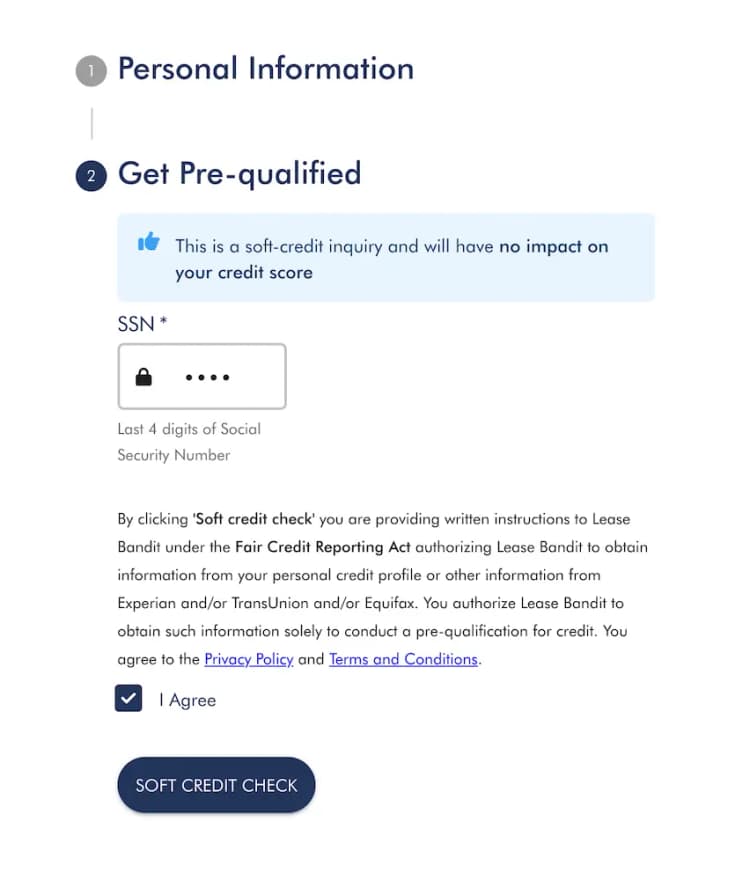
Create an account and fill in your information
Sign up with your email and zipcode. We need your credit tier to provide accurate prices
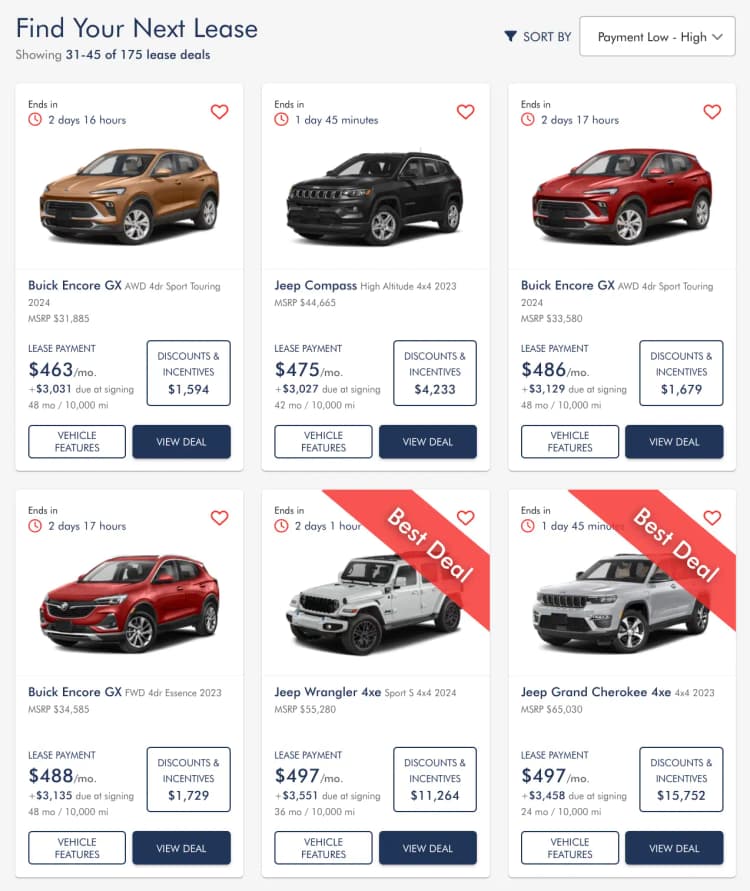
Find your vehicle
Search for vehicles by the year, make, model or even option packages you want
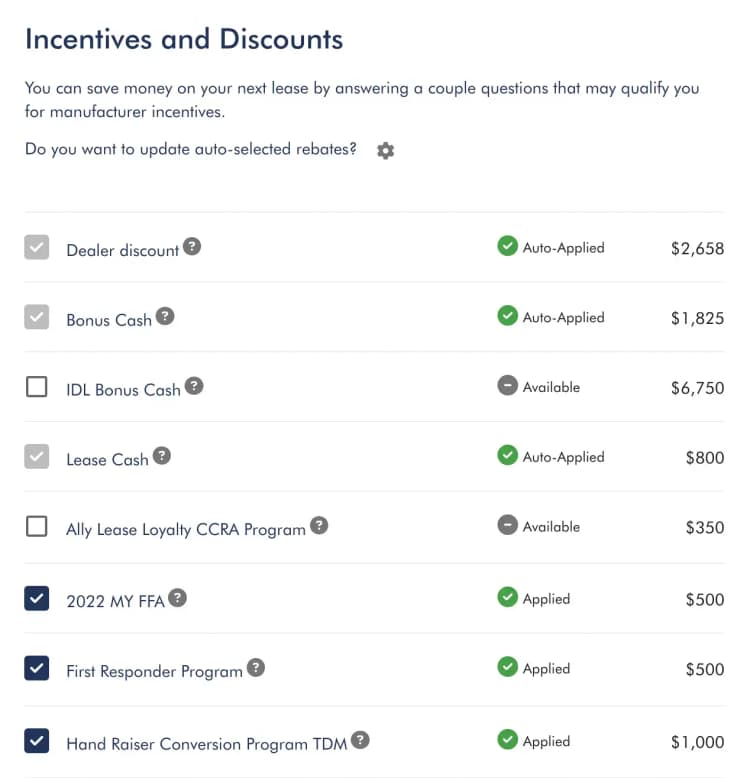
Apply incentives and rebates
Answer some simple questions to take advantage of incentives and rebates
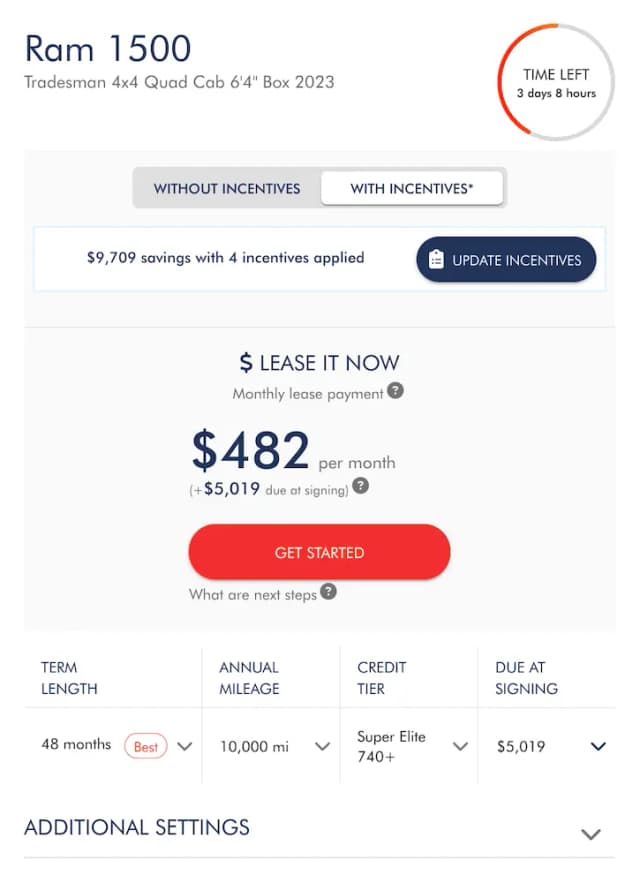
Set your leasing terms and get a great deal
Whether you choose to lease or finance, adjust your term length, mileage, down payment, and other conditions to find the perfect plan. Enjoy flexible options tailored to your needs and drive away with confidence.
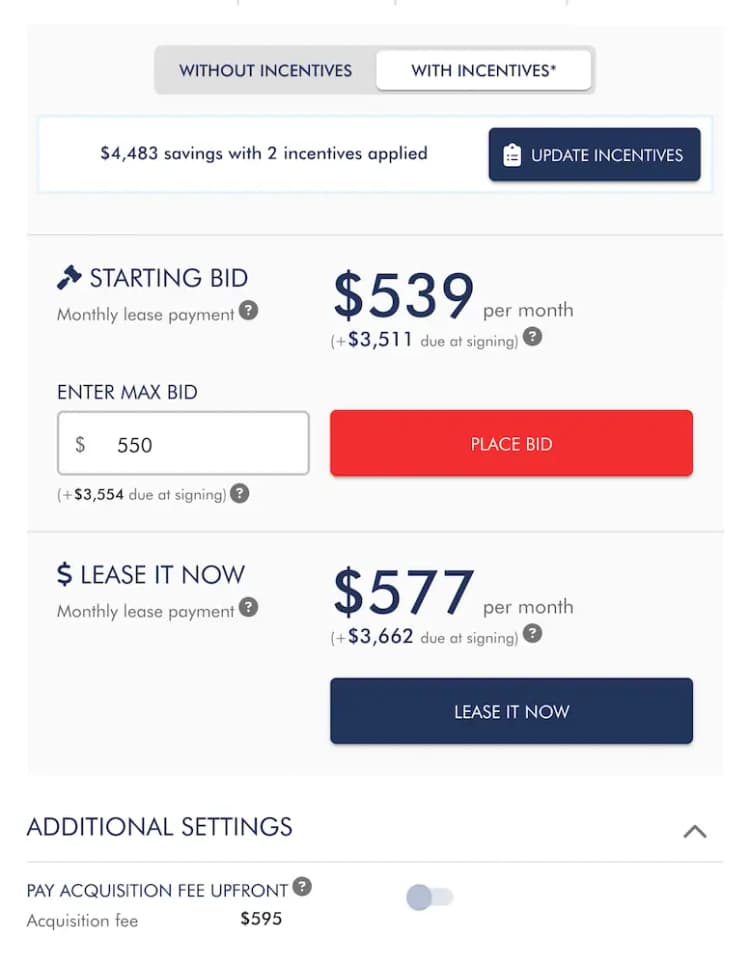
Explore Leasing and Financing Options
Discover your perfect vehicle through flexible leasing and financing options, with great deals tailored to your needs.
Comparing Virginia's numbers against a lease elsewhere is easier once you can see actual current offers side by side — Auto Bandit's deal listings show today's available lease and finance terms across Virginia dealers, already reflecting incentives and dealer discounts, so you can check a specific vehicle's real out-the-door math against everything above.
Zero Down Lease Options in Major Virginia Cities
Lease or Finance a Car Near You

