

Drive away with your dream car
Vehicle Leasing and Financing Simplified
Leasing a Hyundai: Incentives, Taxes, and What Actually Affects Your Payment
Hyundai has built its U.S. lineup around exactly the kind of vehicles that make sense to lease: efficient hybrids like the Tucson Hybrid and Santa Fe Hybrid, family-friendly SUVs like the Palisade, and a fast-growing EV range led by the IONIQ 5 and IONIQ 9. Leasing a Hyundai near you means lower monthly payments than financing the same vehicle, a shorter commitment, and the option to hand back the keys every few years instead of watching a car depreciate on your balance sheet.
But a Hyundai lease quote is built from more moving parts than the sticker price — manufacturer incentives, your state’s specific tax treatment of leases, and a set of standard fees that show up on every contract whether you’re leasing a Tucson, an Elantra, or an IONIQ 9. This guide walks through all of it, in plain language, so you know what you’re actually looking at before you sign. AutoBandit’s current Hyundai lease and finance deals already build in available incentives and dealer discounts — this page is here to explain how those numbers get built in the first place.
AutoBandit currently operates in a defined set of U.S. states; availability varies by location, so confirm current eligibility for your zip code on the deals page before assuming a specific offer applies to you.
Hyundai Details, Lease Deals & More
Hyundai is renowned for delivering innovation, reliability, and cutting-edge technology. With models like the Hyundai Sonata, perfect for those seeking a stylish and fuel-efficient midsize sedan, and the Hyundai Tucson, offering versatility and advanced safety features as a compact SUV, there’s something for everyone. Explore our full lineup of Hyundai models and find the best fit for your driving needs. Each model is available with competitive leasing and financing options through AutoBandit.
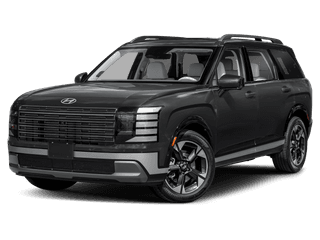
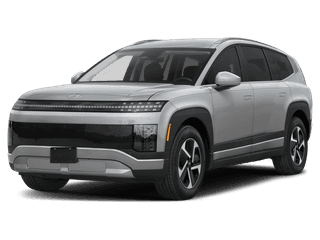
See All of Our Hyundai Available to Lease or BuyMost popular models from Hyundai
Hyundai offers a diverse range of vehicles, with something to suit every driver. Here are some of the most popular models, known for their fuel efficiency, advanced technology, and stylish designs.







Best Deals available now
Looking for the best deals on Hyundai vehicles? AutoBandit has curated some of the top leasing and financing offers available for Hyundai today.


Why Hyundai lease payments look the way they do right now
Two federal-level changes are reshaping Hyundai lease math in 2026, and they’re worth understanding before you compare a quote to something you saw last year.
The federal EV tax credit is gone. For several years, buyers and lessees of qualifying EVs — including Hyundai’s IONIQ 5, IONIQ 9, and Kona Electric — could benefit from a federal clean vehicle credit worth up to $7,500. Leasing companies were often able to claim a version of that credit (the commercial clean vehicle credit) even on models that didn’t otherwise qualify for the consumer credit, and pass the savings through as a lower monthly payment. Under the One Big Beautiful Bill Act, both the consumer credit and the commercial version used in lease deals ended for vehicles acquired after September 30, 2025. In practical terms: if you’re comparing an IONIQ lease quote today against one from 2024 or early 2025, don’t expect the old “hidden EV discount” to be baked in anymore. Some of that gap is being offset by manufacturer lease cash and inventory-driven incentives instead — see the next section — but it’s no longer a federal tax credit doing the work. You can read the IRS’s own summary of what changed on its clean vehicle tax credits page.
Tariffs on Korea-built vehicles are a live variable, not a fixed cost. Hyundai still imports a large share of its U.S. lineup — including models like the Tucson, Kona, and IONIQ 6 — directly from South Korea, and those vehicles are subject to a Section 232 auto tariff. That rate has moved more than once in the past year: it was cut from 25% to 15% under the 2025 U.S.–South Korea trade agreement, with the reduction formally published in the Federal Register, and it has been the subject of further back-and-forth since. Hyundai has generally chosen to absorb a portion of tariff costs rather than pass all of it on to shoppers, and has leaned on U.S.-built inventory (from its Georgia “Metaplant”) to soften the impact on certain models. What this means for you: tariff-related pricing can shift with little warning, which is exactly why AutoBandit flags Tariff-Free deals separately in our listings — those are offers built on inventory that isn’t currently exposed to the added Korea-import duty. Always check the current status on a specific deal rather than assuming last month’s number still applies.
Incentive programs that can still lower your Hyundai lease payment
With the federal EV credit off the table, the incentives that move the needle on a Hyundai lease now come from three places:
Hyundai Motor Finance lease cash and bonus offers. Hyundai Motor Finance (headquartered in Dallas, Texas, and Hyundai’s captive lender since 1989) regularly runs its own lease cash, retail bonus cash, and rate-discount offers that are applied before you ever see a payment quoted. These change monthly and by region, and they’re the reason two dealers 20 miles apart can quote different numbers on the identical trim. AutoBandit’s deals are built to reflect current available incentives and dealer discounts automatically, so the price you see on a listing already accounts for what’s currently on offer — you don’t need to hunt for a separate rebate code.
Buyer-segment programs. Hyundai has historically offered standing programs for specific groups, most commonly military members and veterans, recent college graduates, and first responders in some markets. These typically stack with other current offers and usually require proof of eligibility (a military ID, DD-214, or diploma/enrolment verification) at the dealer. Not every model or region has every program active at a given time, so it’s worth confirming eligibility on the specific vehicle you’re looking at.
State and local EV incentives. While the federal EV credit has ended, several states still run their own rebate or tax-credit programs for electric and plug-in hybrid vehicles, independent of federal law — and some have expanded their programs specifically because the federal credit went away. If you’re in California, New York, New Jersey, Connecticut, Illinois, or another state with an active EV incentive program, it’s worth checking your state energy or environmental agency’s site before you lease an IONIQ 5 or IONIQ 9, since eligibility rules, funding caps, and rebate amounts vary significantly and change throughout the year. Some utilities also offer separate rebates for home charging equipment.
None of these programs are guaranteed on any individual deal — incentives are dynamic and change often, which is why AutoBandit always points you to the live deals page rather than a fixed number on this page.
What a Hyundai lease actually costs: the fees behind the payment
The advertised monthly payment on a Hyundai lease is only part of the picture. Here are the standard charges that typically show up in a Hyundai Motor Finance lease contract, based on current manufacturer lease offers. Treat these as typical ranges to watch for, not guaranteed amounts — your exact contract governs, and terms vary by state, model, and current promotion.
Acquisition fee — a one-time fee charged at lease signing, commonly around $650, usually rolled into the payment rather than paid separately.
Disposition fee — charged at lease-end if you return the vehicle without leasing or financing another Hyundai through the same lender, commonly in the $300–$400 range. It’s often waived if you move into another Hyundai lease, and a handful of states restrict or prohibit charging it at all.
Excess mileage charge — most Hyundai leases are written on 10,000-, 12,000-, or 15,000-mile-per-year allowances, with overage typically billed somewhere between $0.15 and $0.25 per mile at turn-in, depending on the model and mileage tier you chose. If your daily driving is closer to 15,000 miles a year, it’s almost always cheaper to select the higher mileage tier upfront than to pay overage fees later.
Purchase option fee — if you decide to buy your leased Hyundai at lease-end instead of returning it, expect a fee (commonly around $300) on top of the pre-set residual value, waived in some states.
Excess wear and use charges — dings, tire wear beyond a certain tread depth, and interior damage beyond normal use can generate charges at inspection. A pre-return inspection a few weeks before turn-in can catch and sometimes let you address issues before the official one.
Gap coverage — most Hyundai leases include gap protection (covering the difference between what you owe and what the vehicle is worth if it’s totalled or stolen) built into the lease structure, but it’s worth confirming this explicitly rather than assuming.
Sales tax on a Hyundai lease: it depends on your state
This is one of the most misunderstood parts of leasing, and it can meaningfully change your total cost even when two states quote an identical monthly payment. Broadly, states fall into three categories:
Most states tax only your monthly payment. In states like California, Florida, Pennsylvania, and Maryland, sales tax is calculated on each individual lease payment as you make it — not on the full value of the car. This is generally the lease-friendlier approach, since you’re only ever taxed on the portion of the vehicle you’re actually using.
Some states collect the tax upfront, on the full stream of payments. New York, New Jersey, and Minnesota calculate tax on the total of all your scheduled lease payments and generally collect it at signing (New Jersey is a partial exception — it lets you choose between taxing the full payment stream or the purchase price upfront). This doesn’t necessarily make the lease more expensive overall, but it does change your due-at-signing number, sometimes substantially.
A small number of states tax the full vehicle price, similar to a purchase. Texas is the clearest example: motor vehicle tax is generally due on the vehicle’s full value at the time of titling and registration, whether you buy or lease it. That’s a meaningfully different tax base than a payment-based state, and it’s one reason identical Hyundai lease terms can produce a different real-world cost in Texas than in, say, Illinois (which taxes the down payment and monthly lease payments rather than the full purchase price).
Because tax rules are set at the state level and change periodically, always confirm the current treatment with your state’s department of revenue or motor vehicle agency, or check the specific terms listed on the vehicle’s offer page. For a plain-language rundown of how lease costs and disclosures work at a federal level — the numbers your contract is legally required to show you — the FTC’s consumer guide on financing or leasing a car is a solid starting point, and our own car leasing FAQ covers many of the state-by-state questions AutoBandit shoppers ask most.
What happens when your Hyundai lease ends
You generally have three options as your term winds down, and it’s worth deciding early since some choices affect what you should be checking at inspection time:
Return the vehicle. You’ll go through a lease-end inspection for wear and mileage, pay any disposition fee and overage charges that apply, and walk away. This is the simplest option if you’re ready for something new.
Buy it out. If the vehicle is worth more than its preset residual value — which can happen with strong resale models — buying it out can put equity in your pocket. Contact Hyundai Motor Finance directly for your exact payoff figure before deciding.
Lease or finance another Hyundai. Rolling into a new lease at the same dealer or through the same lender often gets disposition fees waived and can give you room to negotiate mileage overage, since the dealer has an incentive to keep you as a customer.
Whichever route makes sense, start the conversation 60–90 days before your lease-end date — that gives you time to check current resale value, review your contract’s specific terms, and compare what a new Hyundai lease looks like against staying in your current vehicle.
Frequently asked questions about leasing a Hyundai
Is it cheaper to lease a Hyundai than to finance one? In most cases, yes, on a monthly basis — leasing typically means lower payments than financing the same vehicle, since you’re only paying for the portion of the car’s value you use during the term, plus interest (called the “rent charge” in a lease). You won’t build equity the way you would with a loan, so the better option depends on whether you value a lower payment and flexibility or long-term ownership.
Does leasing a Hyundai EV still qualify for a tax credit? Not at the federal level. The federal credits that supported EV leases, including the version leasing companies used to lower payments, ended for vehicles acquired after September 30, 2025. Some state-level EV rebate programs are still active and independent of federal rules — check your state’s current program before assuming a number.
What credit score do I need to lease a Hyundai? Hyundai Motor Finance’s advertised lease specials are generally aimed at well-qualified applicants, which typically means good-to-excellent credit. Lower credit scores usually mean a higher money factor (the lease equivalent of an interest rate) rather than an automatic disqualification — actual approval and terms depend on your full credit profile.
Can I negotiate the price on a Hyundai lease? Dealers on AutoBandit set and list their own pricing, so any negotiation happens directly between you and the dealer — AutoBandit doesn’t negotiate on your behalf. What AutoBandit does provide is transparent, pre-priced listings with available incentives and dealer discounts already reflected, so you can compare offers on a like-for-like basis before you reach out to a dealer.
What’s the difference between “tariff-free” and other Hyundai lease deals? On AutoBandit, a Tariff-Free tag means the specific offer is built on inventory that isn’t currently subject to the added Section 232 duty on Korea-built vehicles — generally U.S.-assembled inventory. Because tariff policy has changed more than once in the past year, this tag reflects the deal’s current status rather than a permanent feature of the model.
How many miles can I put on a leased Hyundai per year? Standard Hyundai lease allowances are typically 10,000, 12,000, or 15,000 miles per year, with the lower mileage tiers producing lower monthly payments. If you’re unsure how much you’ll drive, it’s usually cheaper to select a higher tier upfront than to pay per-mile overage charges at turn-in.
Ready to see current Hyundai lease offers?
Everything above explains how a Hyundai lease payment gets built — the rest is finding the specific deal that fits your driving and budget. Head back to the AutoBandit homepage to search by monthly budget, body style, and zip code, or jump straight to current Hyundai deals to see transparent, incentive-inclusive pricing on the Tucson, Elantra, Santa Fe, Palisade, IONIQ 5, IONIQ 9, and the rest of the lineup.
Sources and methodology: Federal tax credit information is drawn from the IRS’s clean vehicle tax credit guidance (irs.gov). Tariff information reflects the U.S. Federal Register notice implementing the U.S.–South Korea trade agreement’s auto tariff provisions, current as of publication. Fee ranges (acquisition, disposition, mileage overage, purchase option) reflect typical figures disclosed in current Hyundai Motor Finance lease offers and are illustrative — your individual contract governs. State tax treatment is summarized at a general level and can change; confirm current rules with your state’s tax or motor vehicle authority. This page is updated periodically; incentive amounts, tariff status, and specific lease pricing shown elsewhere on AutoBandit reflect current offers and may differ from the general ranges described above.
How AutoBandit Works
At AutoBandit, we simplify the car leasing process, offering straightforward, transparent leasing and financing options tailored to your needs. Whether you’re shopping for a new Hyundai, our platform provides quick access to the best deals without the hassle. AutoBandit’s unique approach ensures you get competitive rates and a seamless experience from start to finish.
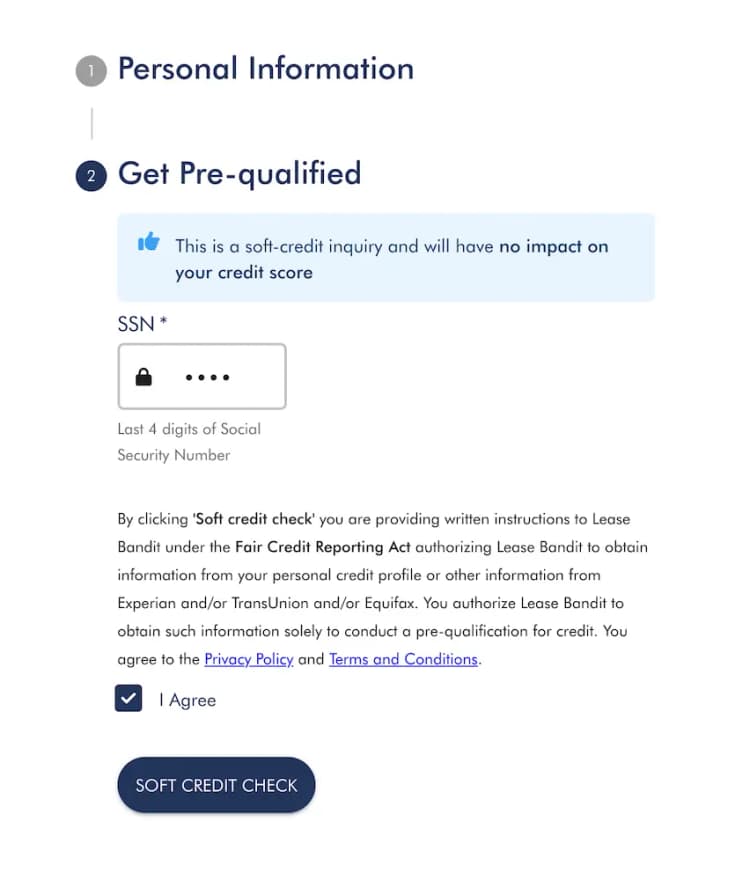
Create an account and fill in your information
Sign up with your email and zipcode. We need your credit tier to provide accurate prices
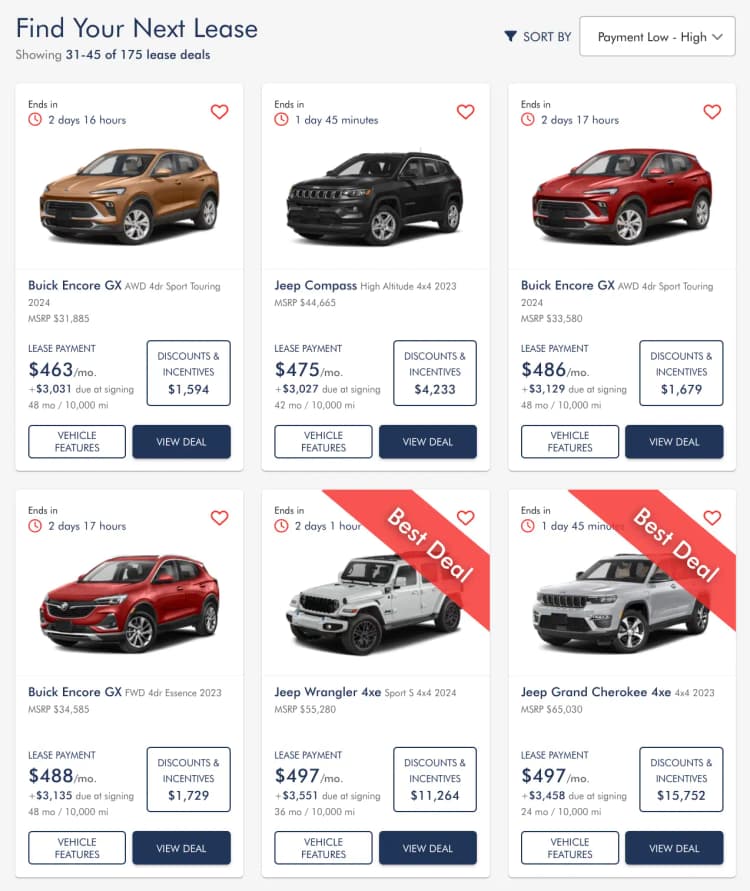
Find your vehicle
Search for vehicles by the year, make, model or even option packages you want
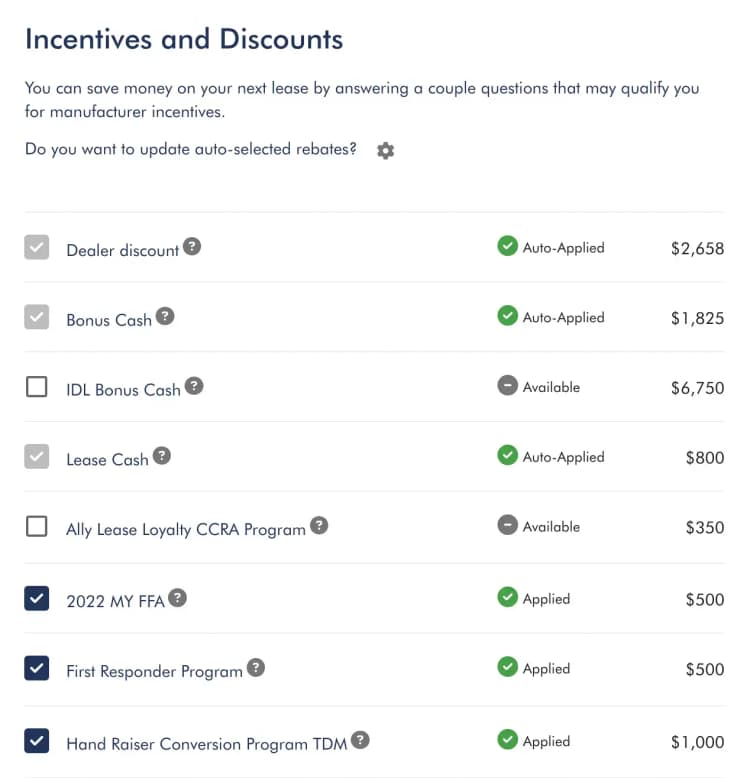
Apply incentives and rebates
Answer some simple questions to take advantage of incentives and rebates
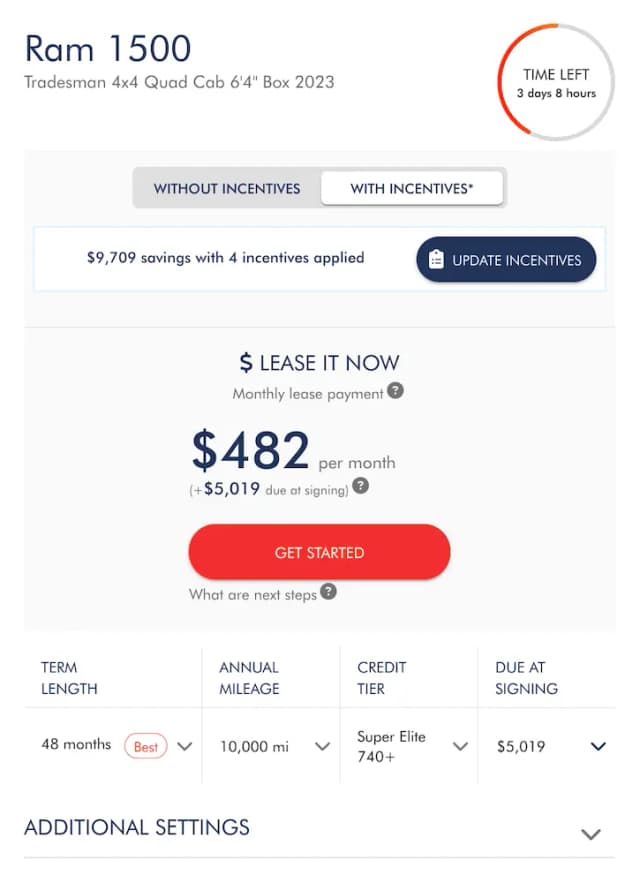
Set your leasing terms and get a great deal
Whether you choose to lease or finance, adjust your term length, mileage, down payment, and other conditions to find the perfect plan. Enjoy flexible options tailored to your needs and drive away with confidence.
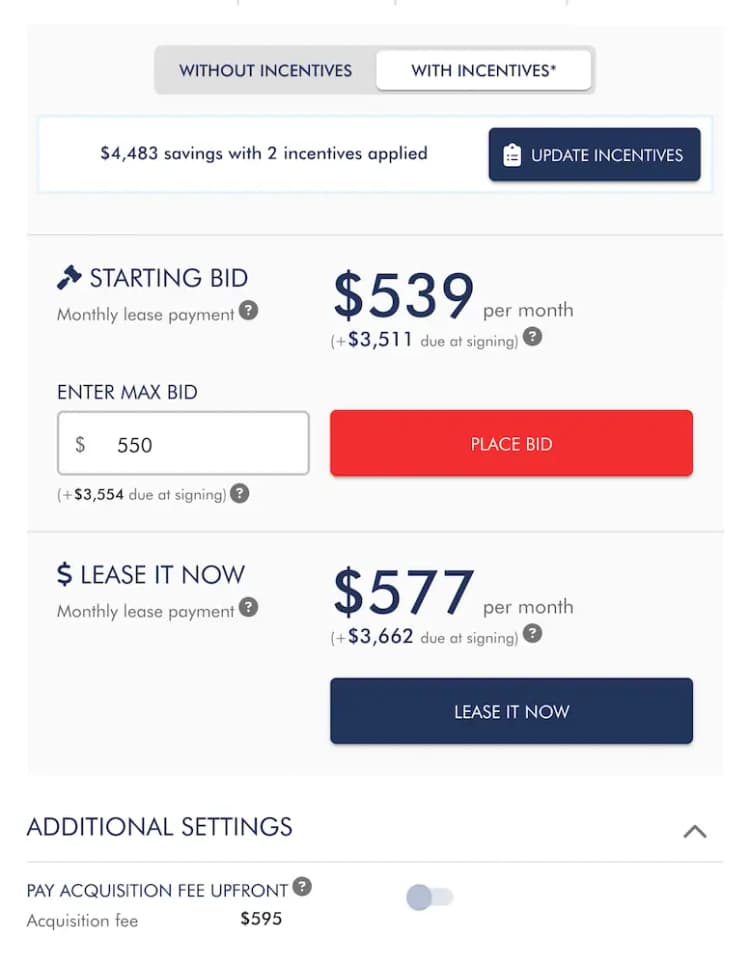
Explore Leasing and Financing Options
Discover your perfect vehicle through flexible leasing and financing options, with great deals tailored to your needs.
Shop other brands
*Dealers on our platform offer new vehicles only. Pre-owned, certified, or used vehicles are not offered through our platform.






Explore Savings in Our Best Deals Section
Discover current savings with AutoBandit's Best Deals Section. Explore offers on both luxury and affordable car leases and financing options. Whether you're seeking high-end sophistication or practical value, our curated selection provides flexible solutions to fit every budget. Review the available savings and find a car that fits your needs and budget.

