



Why Kia Lease Deals Look Different Right Now
Kia's lease pricing right now is being shaped by three things at once, and it's worth understanding all three before you assume a low advertised payment tells the whole story.
First, Kia Finance America (KMF) runs manufacturer-funded lease support — sometimes called "lease cash" — on a rotating list of models each month. Second, a meaningful share of Kia's best-selling SUVs are now assembled in the U.S., which has made those specific trims less exposed to the import tariffs that have pushed up pricing on some competitors since 2025. Third, the $7,500 federal EV tax credit that used to flow into EV lease payments through the "leasing loophole" ended on September 30, 2025 — so EV lease payments you may remember from last year aren't the baseline anymore.
None of that shows up in a single advertised number, which is exactly why it's worth reading the next few sections before you compare payments across trims, dealers, or brands.
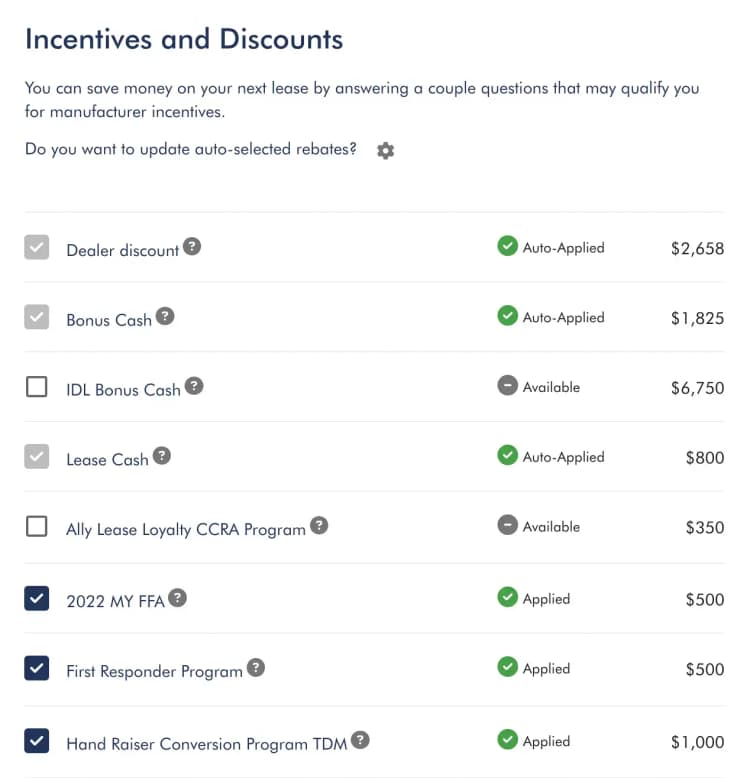
Kia Incentive & Rebate Programs, Explained
Kia Finance America runs a handful of named programs that dealers apply at the point of sale. Availability, dollar amounts, and eligible models change monthly, so treat the table below as a guide to what these programs are and who typically qualifies — not as a quote. Current dollar figures live in the deals above and on Kia Finance America's own offers page.
| Program | What it is | Who typically qualifies |
|---|---|---|
| Kia Customer Cash | A direct rebate applied to the capitalized cost on select models, lowering the monthly payment | Any qualified lessee on an eligible model |
| Military Specialty Incentive Program | Additional cash allowance stacked on top of other offers | Active duty, reserve, retired, or honorably discharged U.S. military, plus eligible spouses |
| Owner Loyalty Program | Reduced money factor or bonus cash for current Kia owners/lessees moving into a new lease | Existing Kia owners or lessees in good standing |
| KMF Low APR / Dealer Choice Program | Below-market lease money factors or finance rates set by Kia Finance America, sometimes offered as a dealer's choice between rate support and cash | Applicants approved in Kia Finance America's top credit tiers |
A few things worth knowing about how these actually work in practice:
- Programs can't always be combined. Customer Cash and a reduced money factor, for example, are sometimes either/or.
- Credit tier changes the deal more than the advertised incentive does. Kia's lowest money factors and biggest incentives are generally reserved for its top one or two credit tiers — the "starting from" price you see on an ad almost always assumes tier-one credit.
- Incentives are regional. A program active in one part of the country may not be running in another, and dealer participation is optional for some of them.
Source note: Program names and structure are drawn from Kia Finance America's public offers page and current dealer incentive disclosures. Verify exact terms and current dollar amounts before signing, since these are updated at least monthly.
Built in Georgia: What the “Tariff-Free” Tag on Some Kia Deals Means
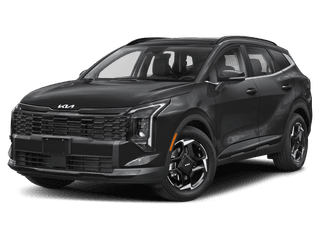
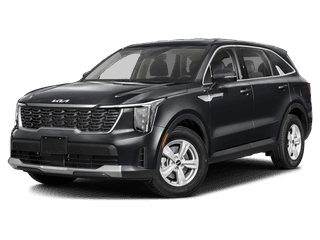
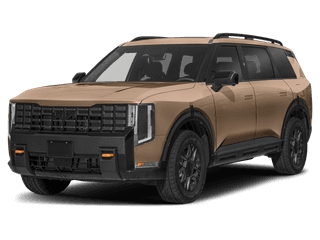
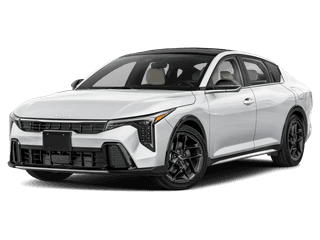
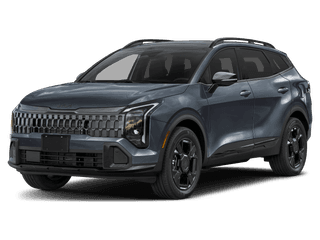
If you've noticed some listings above tagged "Tariff-Free," here's the backstory: Kia has operated an assembly plant in West Point, Georgia since 2009, and it's grown into a real piece of the company's U.S. lineup. The Telluride, Sorento, Sportage, K5, and the electric EV9 are all built there — together, they account for roughly 40% of the Kia vehicles sold in the U.S.
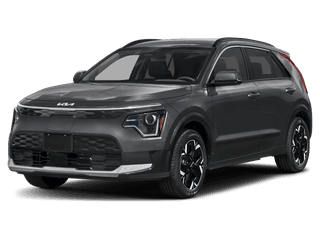
That matters because of the Section 232 auto tariffs that took effect in 2025, which apply to vehicles imported into the U.S. A Kia assembled at the Georgia plant simply isn't subject to that import tariff the way a vehicle built in South Korea is — models like the Forte, Seltos, K4, and most Niro variants are still Korea-built and can carry that added cost exposure. It's a real, structural reason (not a marketing gimmick) why lease pricing on the Georgia-built models has generally stayed more stable, and it's part of why those specific trims tend to show up with the strongest lease payments on this page.
If minimizing tariff-related price risk is part of your decision, the Telluride, Sorento, Sportage, K5, and EV9 are the models to focus on.
The Federal EV Tax Credit Is Gone — What That Means for a Kia EV Lease
This is worth being direct about, because a lot of older articles and forum posts still describe an incentive that no longer exists.
Through September 30, 2025, the federal government offered up to $7,500 toward a new EV under the Clean Vehicle Credit (Internal Revenue Code Section 30D), and a separate Commercial Clean Vehicle Credit (Section 45W) let leasing companies claim a similar credit as the vehicle's titleholder — many passed some or all of that value through as a lower lease payment. That's the mechanism people mean when they talk about the "EV leasing loophole." Both credits, along with the credit for used EVs, were eliminated for any vehicle acquired after September 30, 2025, under the tax law commonly known as the One Big Beautiful Bill Act. The IRS confirms this directly: none of these credits are available for vehicles acquired after that date.
What this means if you're looking at a Niro EV, EV6, or EV9 lease today:
- There's no federal credit built into current EV lease pricing. Any low payment you see on an EV now reflects manufacturer incentives and dealer pricing only, not a hidden tax credit.
- Manufacturer-funded lease cash on EVs has picked up some of the slack. Kia has been leaning more heavily on its own Customer Cash and lease support programs on electric models specifically, partly in response to the credit disappearing.
- State-level incentives may still apply. Several states run their own EV rebate or tax credit programs independent of the federal one — these vary widely by state, income limits, and available funding, so check your state energy office before assuming one applies.
- The federal EV home charger credit is a separate, still-active benefit (30% of installation cost up to $1,000) but only through June 30, 2026, and only in eligible census tracts — worth knowing if you're pairing an EV lease with home charging.
For full detail on eligibility history and what officially ended, the U.S. Department of Energy's Alternative Fuels Data Center maintains the federal record on the commercial credit specifically.
Sales Tax on a Kia Lease: What You'll Actually Pay
Sales tax is the part of a lease payment shoppers underestimate most often, mostly because it isn't handled the same way everywhere. Two methods dominate:
Monthly-payment method (most common): Tax is calculated only on your monthly lease payment, not the full price of the car — since you're technically only paying for the vehicle's depreciation during the lease term, not buying it outright. A $400 base payment at a 6% rate becomes $424/month.
Full-price method (a smaller group of states): Tax is charged upfront on the vehicle's full negotiated price, similar to a purchase, even though you're leasing. This can mean a noticeably larger due-at-signing amount.
Among the states AutoBandit currently serves, this split roughly breaks down as:
| Typically taxes the monthly payment | Typically taxes the full selling price upfront |
|---|---|
| California, Connecticut, Florida, Indiana, Michigan, Missouri, Pennsylvania, Wisconsin | Illinois, Maryland, Minnesota, New Jersey, New York, Ohio, Texas, Virginia |
Treat this as a starting point, not a guarantee — states periodically change their methodology, local/county taxes can stack on top of the state rate, and how a dealer structures your specific lease agreement can affect the calculation. Your lease disclosure (required under federal law — more on that below) will spell out the exact method used on your contract. For general background on how leasing costs are structured, our leasing FAQ covers the basics in plain language.
One consumer protection worth knowing about: every lease you sign is covered by the Consumer Leasing Act and its implementing rule, Regulation M (12 CFR Part 1013), enforced by the Consumer Financial Protection Bureau. It requires lessors to disclose lease costs, fees, and terms clearly, in writing, before you sign — including the total due at signing, your payment schedule, mileage allowance, and end-of-lease liability. If a disclosure feels vague or a number doesn't match what you were quoted, you're entitled to ask for the written breakdown before signing anything.
Kia Lease Terms and Fees, Decoded
A lease quote is really a handful of separate numbers bundled together. Here's what each one means and where Kia typically lands:
| Term | What it means | Typical Kia range |
|---|---|---|
| Money factor | The lease's “interest rate,” expressed as a small decimal. Multiply by 2,400 to estimate the equivalent APR | Varies by credit tier and current KMF promotions |
| Residual value | What Kia Finance America projects the car will be worth at lease-end, expressed as a % of MSRP — this is set by KMF, not negotiated | Set per model/term by KMF |
| Capitalized cost reduction | Your down payment or any rebate applied to lower the monthly payment | Optional — a larger cap cost reduction lowers the payment but adds risk if the car is totaled early |
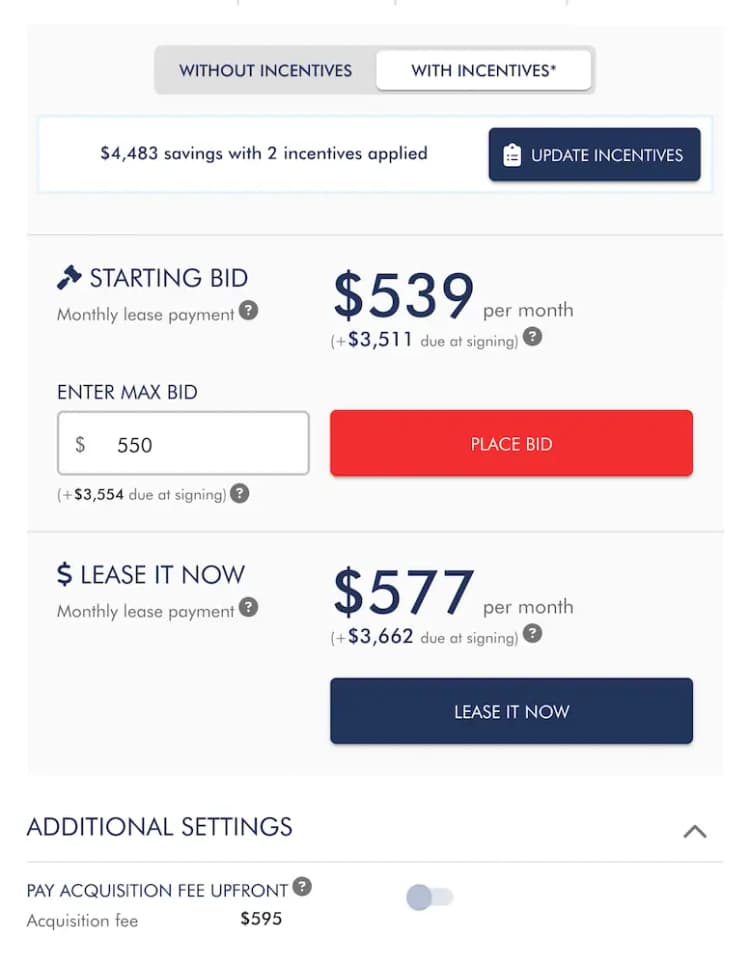
| Acquisition fee | An administrative fee Kia Finance America charges to originate the lease, usually rolled into the payment rather than paid upfront | Roughly $650 |
| Disposition fee | Charged when you return the car at lease-end to cover reconditioning/resale prep — waived if you buy the car out instead | Roughly $400 |
| Excess mileage fee | Charged per mile over your contracted allowance | Roughly $0.20/mile |
| Early termination fee | Charged if you end the lease before the contract term is up | Up to roughly $400, plus any remaining negotiated liability |
Source note: Fee ranges reflect Kia Finance America dealer lease disclosures and are broadly consistent with industry data from sources like Edmunds. Exact amounts vary by contract, state, and current promotions, and will be spelled out in your Regulation M disclosure before signing — never accept a verbal-only fee quote.
Mileage Limits and Your Options at Lease-End
Kia leases are typically written for 10,000, 12,000, or 15,000 miles per year, with 10,000 usually producing the lowest advertised payment and 15,000 the highest. If you're not sure which to pick, it's worth being honest about your actual annual mileage — the excess mileage fee at lease-end is almost always more expensive per mile than simply paying for the higher allowance upfront.
When your lease term ends, you generally have three paths:
- Return the vehicle and walk away, subject to the disposition fee and any excess wear or mileage charges.
- Buy the vehicle at the residual value set in your contract (this also waives the disposition fee).
- Trade into a new lease, rolling any equity — or, less commonly, negative equity — into the new deal.
Kia's standard "normal wear and tear" guidelines allow for minor cosmetic issues (small stone chips, light interior wear) but not things like cracked windshields, dented panels, or aftermarket modifications that weren't removed before return. It's worth doing a pre-return inspection a few weeks before your lease ends, which most dealers can schedule, so you have time to address anything that would otherwise turn into a charge.
Kia's Warranty Coverage While You're Leasing
One thing that quietly makes Kia an easier brand to lease than many competitors: its warranty coverage. Kia backs every new vehicle with a 5-year/60,000-mile limited basic (bumper-to-bumper) warranty and a 10-year/100,000-mile limited powertrain warranty, plus a 5-year/100,000-mile anti-perforation (rust) warranty and 5-year/60,000-mile roadside assistance.
Since most leases run 24–39 months, that means the entire lease term is typically covered by the full bumper-to-bumper warranty, not just the narrower powertrain piece — which lowers the odds you'll ever pay out of pocket for a mechanical issue while you have the car. It's a genuine point of difference from several competing brands, many of which cap basic coverage at 3 years/36,000 miles.
Leasing vs. Financing a Kia
Both are available through AutoBandit's marketplace — here's the short version of how they differ:
| Leasing | Financing | |
|---|---|---|
| Monthly payment | Usually lower | Usually higher |
| What you're paying for | The vehicle's depreciation during the term | The full vehicle price plus interest |
| At the end | Return, buy at residual, or re-lease | You own the car outright |
| Mileage | Limited, with per-mile overage fees | Unlimited |
| Best for | Drivers who like switching vehicles every few years and stay within mileage limits | Drivers who want to build equity and keep the car long-term |
There's no universally "better" answer here — it comes down to how many miles you drive, whether you want to own the car eventually, and how the numbers compare on the specific trim you're looking at. Our leasing FAQ walks through more of these trade-offs if you're still deciding.