
What Is Residual Value on a Car Lease & How to Calculate It
If you’ve ever looked at a car lease and wondered why one deal costs less per month than another—even when the cars seem similar — you’re not alone. One of the biggest (and most misunderstood) factors behind lease pricing is residual value.
Residual value plays a major role in determining your monthly payment, your options at the end of the lease, and whether a lease is truly a good deal or just looks like one on the surface.
In this guide, we’ll break down what residual value on a car lease really means, why it matters, and how to calculate residual value on a car lease yourself — so you can lease with confidence and avoid overpaying. At AutoBandit, transparency is the whole point, and understanding residual value is a big part of that.
What Is Residual Value on a Car Lease?
So, what is residual value on a car lease?
Residual value is the estimated value of a vehicle at the end of your lease term. In simple terms, it’s what the leasing company believes the car will be worth after you’ve driven it for a set period of time—usually 24, 36, or 39 months.
This value is determined before you ever sign the lease, and it’s based on expected depreciation, not guesswork. Leasing companies analyze historical data, brand reliability, market demand, and mileage allowances to predict how much value the car will retain.
Why does this matter?
Because when you lease, you’re not paying for the full price of the car—you’re only paying for the portion of value the car is expected to lose during your lease.
That makes residual value one of the most important numbers in any lease agreement.
Why Is Residual Value Important?
Understanding residual value gives you a huge advantage when evaluating lease offers. Here’s why it matters so much.
Impact on Monthly Lease Payments
Your monthly lease payment is largely based on depreciation. The higher the residual value, the less depreciation you’re paying for, which usually means a lower monthly payment.
In short:
Higher residual value = lower monthly payment
Lower residual value = higher monthly payment
This is why certain vehicles—like popular SUVs, reliable sedans, or in-demand hybrids—often lease better than others, even if their MSRP is higher.
Influence on End-of-Lease Decisions
Residual value also affects what happens when your lease ends.
At lease-end, you typically have three options:
Return the vehicle
Lease a new one
Buy the car for the residual value (plus taxes and fees)
If the market value of the car is higher than the residual value, buying it could be a great deal. If it’s lower, returning it makes more sense.
Knowing the residual value upfront helps you plan ahead instead of being surprised later.
Role in Lease Comparisons
Two leases can look similar on the surface but be very different underneath. Understanding residual value allows you to compare offers more intelligently.
Instead of just asking:
“What’s the monthly payment?”
You can ask:
Why is this payment lower?
Is the residual value strong?
Am I paying for real depreciation—or hidden costs?
This level of clarity is exactly what AutoBandit is built around.
How to Calculate Residual Value on a Car Lease
Now let’s get practical. If you’ve ever asked how to calculate residual value on a car lease, the math is actually straightforward.
The Formula for Residual Value
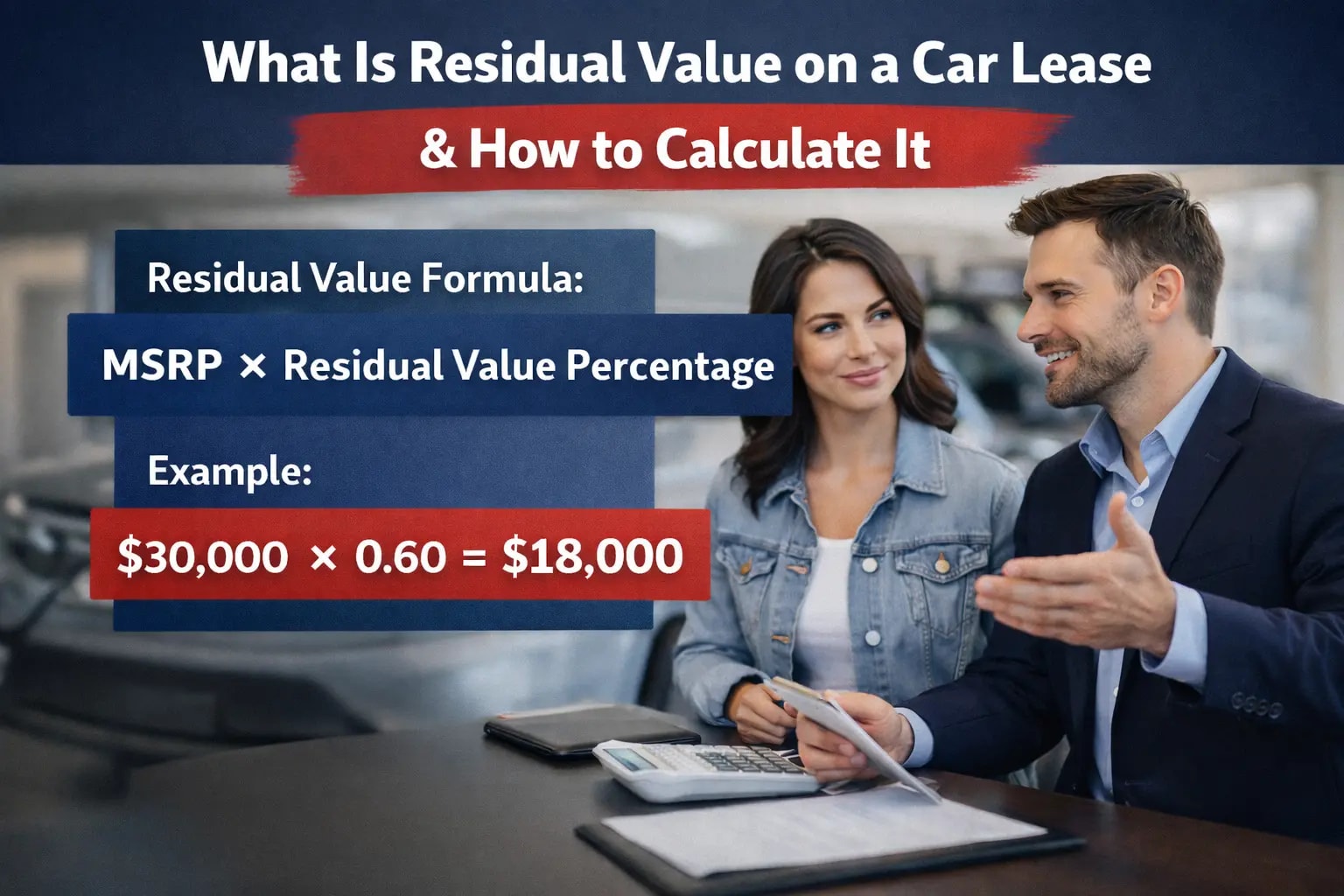
The basic formula is:
Residual Value = MSRP × Residual Value Percentage
Here’s what each part means:
MSRP: The manufacturer’s suggested retail price (not the negotiated price)
Residual value percentage: A percentage set by the leasing company that reflects how much value the car is expected to retain
This percentage is non-negotiable, but knowing it helps you evaluate the deal.
Example Calculation
Let’s say you’re leasing a car with:
MSRP: $30,000
Residual value percentage: 60%
The calculation would look like this:
$30,000 × 0.60 = $18,000
That means the leasing company expects the car to be worth $18,000 at the end of the lease.
Your lease payments are based on the difference between the MSRP and that $18,000—plus interest and fees.
Tools for Estimating Residual Value
Most dealerships don’t explain residual value clearly—and some won’t mention it at all. That’s where AutoBandit stands out.
When you browse lease options on AutoBandit, you can:
See pricing broken down transparently
Compare lease structures side-by-side
Get expert guidance on whether a residual value is strong or weak
Instead of guessing, you get clarity—before you commit.
Factors That Influence Residual Value
Residual value isn’t random. Several key factors influence how much a car is expected to retain its value.
Vehicle Make and Model
Some vehicles simply hold their value better than others.
Cars with strong residual values often include:
Popular SUVs and crossovers
Reliable brands with strong resale demand
Vehicles with proven track records
Luxury cars can lease well too — but residual values vary significantly by model, not just brand.
Mileage Limits
Mileage plays a huge role in residual value.
Standard leases typically allow:
10,000 miles per year
12,000 miles per year
15,000 miles per year
Higher mileage limits mean more wear and tear, which lowers the residual value. That’s why increasing mileage usually raises your monthly payment.
Market Conditions
The used car market matters more than most people realize.
Factors like:
Fuel prices
EV demand
Supply chain issues
Economic shifts
…can all influence how leasing companies set residual values. While you can’t control the market, understanding its impact helps you time your lease more strategically.
Get Started with AutoBandit
Residual value may sound like industry jargon—but once you understand it, leasing becomes far more transparent.
To recap:
Residual value is the estimated value of a car at lease-end
It directly affects your monthly payment and end-of-lease options
Higher residual value usually means a better lease
Knowing how to calculate residual value puts the power back in your hands
At AutoBandit, we believe leasing shouldn’t feel confusing, rushed, or stacked against you. Our platform is built to show you real numbers, real savings, and real options—without dealership pressure or hidden fees.
Whether you’re leasing for the first time or upgrading your current ride, understanding residual value helps you lease smarter, not harder.
Latest Posts
Ready to Take the Wheel? Explore Leasing Options
Lease by Model
Lease by Make
Lease by State

